
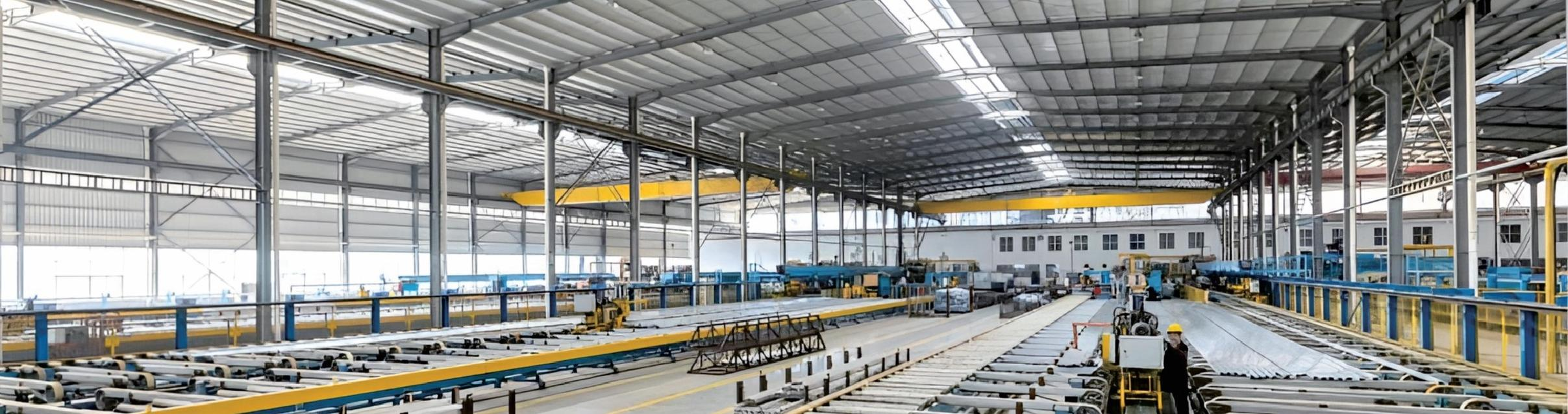
So, what are the key points to pay attention to when installing household photovoltaic systems?
Introduction to Distributed Photovoltaic Systems
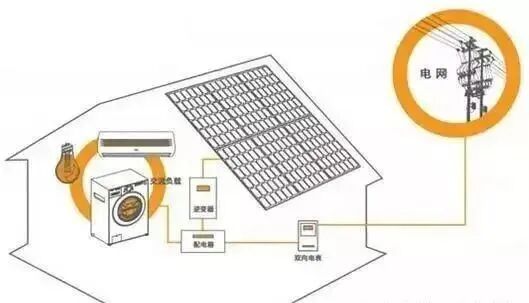
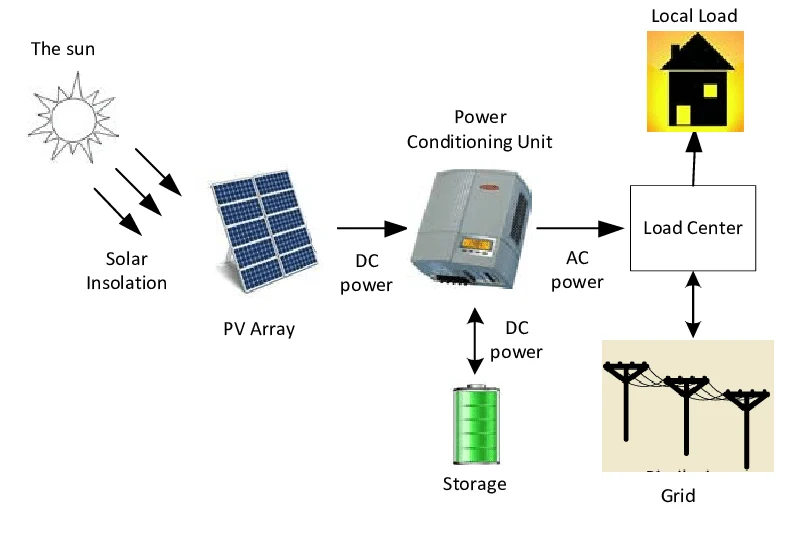
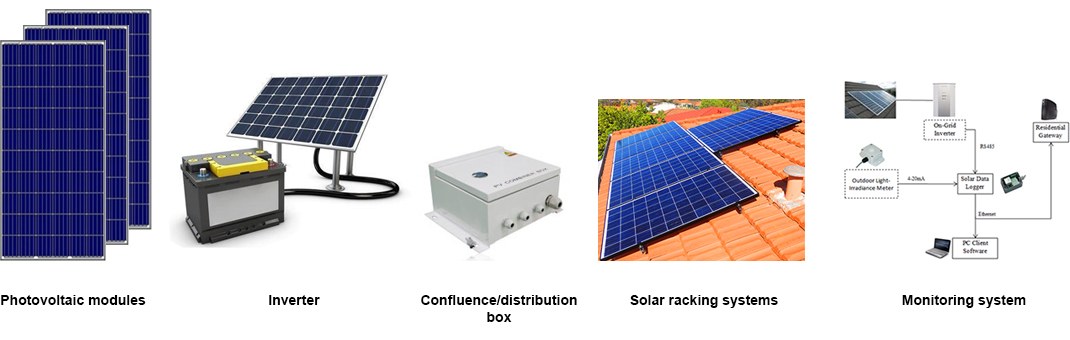
Composition of distributed photovoltaic system
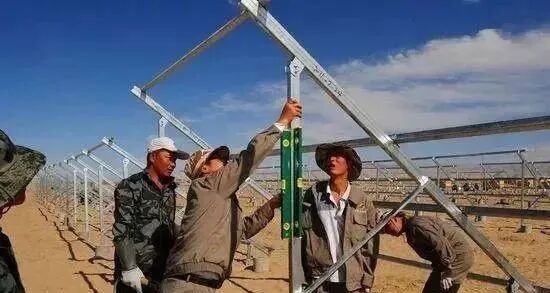
Bracket Installation
1. The verticality deviation of the brackets shall not exceed ±1 mm per meter, and the angular deviation shall not exceed ±1 degree. Overall, the bracket installation must ensure a neat and uniform appearance; the rear uprights must remain perpendicular to the mounting surface, while the main rails must remain parallel to the mounting surface.
The mechanical mounting holes of the modules must be positioned in the vicinity of two main rails; therefore, during bracket installation, the spacing between the two main rails must be maintained within the range of 867–1067 mm.
2. The PV mounting structure is grounded using 40 × 4 mm galvanized flat iron.
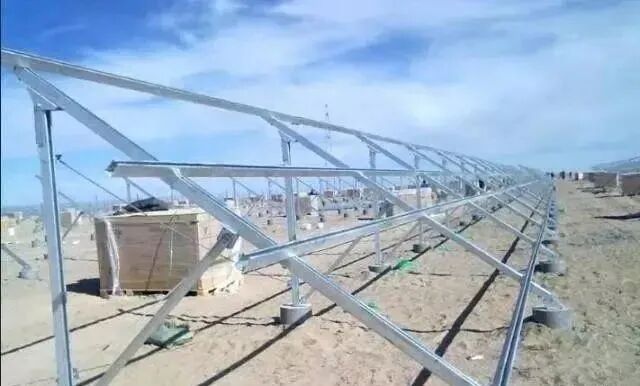
Flat Roof Solar Mounting System Installation Steps:
1. Clear debris from the roof surface. Use a tape measure to mark the installation locations for the bases, then position the bases accordingly.
2. Use an impact drill to bore holes into the concrete bases. The hole depth should be determined based on the thickness of the base and the length of the anchor bolt (use M10 diameter bolts). (If bolts were pre-embedded in the bases, clean any debris or impurities from the threads.)
3. Use a suction pump or blower to remove debris from inside the holes, ensuring they are thoroughly clean.
4. Insert the expansion bolts into the holes. Use a non-metallic mallet (such as a rubber or wooden mallet) to gently tap the bolts into place, leaving a clearance of 30mm between the bolt head and the hole opening.
5. Install the bottom beams or mounting bases. Align the holes in the beams/bases with the bolts, then use a wrench to tighten the nuts securely. (Repeat this process to secure the remaining bases.)
6. Based on the specified mounting angle, mark the installation positions for the rear uprights. Use bolts to fasten the bases to the rear uprights.
7. Secure the diagonal beams. Use angle connectors to fasten them to the rear uprights, and use bolts to connect the diagonal beams to the bases.
8. Secure the rails (purlins). Determine the rail placement based on the mounting holes on the solar modules; position the rails so they are within ±100mm of the module mounting holes. Ensure that the edges of the module frames at both ends are positioned 200–300mm away from the diagonal beams. Use specialized nuts to fasten the rails to the diagonal beams.
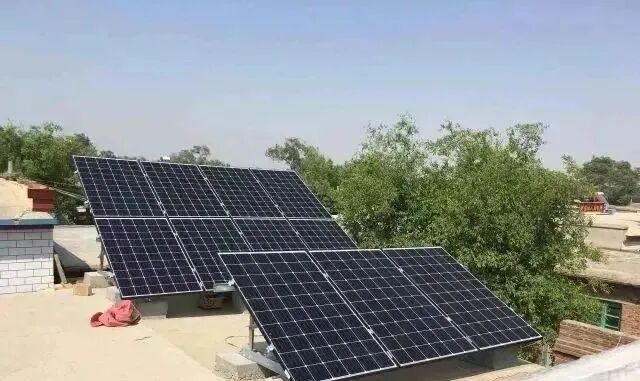
Module Installation: Prior to installation, determine the mounting height of the modules. The lower edge of the module's glass surface should be positioned 300 mm above the ground. Use side clamps to secure the modules; secure the lower clamps first to prevent the modules from sliding down. The module frames should be positioned 20–30 mm away from the ends of the mounting rails. Two people are required to coordinate during the securing process; use the string-line method or a spirit level to ensure the overall parallelism of the modules.
Installation of Color Steel Plate Roofing
1. Based on the dimensions specified in the drawings, determine the installation positions for the clamps. Lay anti-slip footboards across the roof surface to prevent damage to the interlocking seams of the color steel plates. Secure the color steel clamps to their respective positions using cylindrical head socket screws. For trapezoidal color steel plates, adopt a direct-drilling method to fasten the C-channel steel rails to the crests (high points) of the plate's corrugations; place a rubber gasket beneath each drilled hole and apply a multi-purpose adhesive to both contact surfaces. (Ideally, secure all clamps in a single operation; if conditions do not permit this, secure at least two rows at a time to facilitate the subsequent installation of PV modules.)
2. Rail Installation: Select the spacing between the mounting rails based on the positions of the mounting holes on the PV modules. Ensure that the distance between the rail centerline and the module mounting holes falls within a tolerance of ±100 mm. Insert specialized nuts through the rails to fasten them securely to the clamps; adjust the position of the module frames as necessary, then tighten the assembly using socket head bolts.
3. Module Installation: Place the first PV module onto the rails, aligning it along the outer edge. Use a spirit level to ensure the module is perfectly level. Maintain a minimum clearance of 20 mm between the module frame and the outer edge of the rail. Secure the first module using end clamps. Install the second module and secure it using mid-clamps. The tightening method for all clamps involves a diagonal sequence to ensure even pressure. Proceed to install the remaining modules in the same sequential manner.
Tile Roof Solar Mounting System Installation
1. Based on the dimensions specified in the drawings, mark the installation locations for the tile mounts on the roof. Remove the tiles at these designated spots, and secure the tile mounts to the roof purlins using wood screws (ideally, secure all tile mounts in a single pass; if conditions do not permit this, secure at least two rows at a time to facilitate rail installation).
2. Rail Installation: Select the rail spacing based on the positions of the module mounting holes (allowing for a tolerance of ±100 mm relative to the mounting holes). Insert T-nuts through the rails to secure them to the tile mounts; then, adjust the position of the module frames and tighten them using hex socket bolts.
3. Module Installation: Place the first module against the side of the rail and use a spirit level to ensure the module is perfectly level. Ensure that the edge of the module frame is positioned at least 20 mm away from the side of the rail, and secure it using an end clamp. Install the second module and secure it using a mid-clamp; the clamping method involves tightening the fasteners diagonally. Continue installing the remaining modules in sequence.
Module Installation
1. A clearance of at least 50 mm shall be maintained between the modules and the mounting surface.
2. A gap of 20 mm shall be left between adjacent modules.
3. The lowest point of the PV module shall be at a distance of 300 mm or more from the ground. In cases involving standard ground surfaces, to prevent splashing mud/sand or damage by small animals, this distance should ideally not be less than 1000 mm.
4. The distance between the glass surface of the PV module and the roof surface shall be at least 10 cm.
5. A clearance of no less than 20 mm shall be reserved between the ends of the modules and the mounting rails to prevent the side clamps from dislodging.
6. Secure the mounting rails; measure and mark the rail installation positions such that the frames at both ends of the modules are positioned 300–500 mm away from the rails.
7. Initially, the horizontal and vertical gaps between two adjacent modules shall both exceed 20 mm to facilitate the installation of the mid-clamps; once finally secured, both the horizontal and vertical gaps shall be set to 20 mm.
8. A clearance of no less than 20 mm shall be reserved between the ends of the modules and the mounting rails to prevent the side clamps from dislodging.
9. The module frame shall be positioned no less than 20 mm away from the side edge of the mounting rail.
10. The connecting cables between modules shall be secured with cable ties at intervals of every 50 cm.
**DC Combiner Box Installation**
1. The insulation resistance between the input/output terminals of the PV combiner box and the box's grounding terminal shall be no less than 2 MΩ (at 1000 V DC).
2. The installation height of the inverter must be appropriate; the inverter's air intake (located at the bottom) shall be positioned 600 mm above the ground, and the air outlet (located at the top or side of the unit) shall be positioned 400 mm above the ground.
**PV Cable Installation**
1. A cable slack of 20–30 cm shall be left at both ends of the module cables to ensure sufficient length for fabricating 2–3 cable terminations.
2. PV module cables shall be pre-laid in advance. The quantity pre-laid should be determined based on the location of the PV combiner box to avoid wastage; the reserved length for each cable run shall not exceed 30 cm.
**Grounding Installation**
1. Grounding down conductors should preferably utilize round steel bars or flat steel strips; round steel bars are the preferred choice. The diameter of round steel bars shall be no less than 8 mm. The cross-sectional area of flat steel strips shall be no less than 48 mm², with a minimum thickness of 4 mm.
2. Artificial vertical grounding electrodes buried in the soil should preferably utilize angle steel, steel pipes, or round steel bars; artificial horizontal grounding electrodes buried in the soil should preferably utilize flat steel strips or round steel bars. The diameter of round steel bars shall be no less than 10 mm; the cross-sectional area of flat steel strips shall be no less than 100 mm², with a minimum thickness of 4 mm; the thickness of angle steel shall be no less than 4 mm; and the wall thickness of steel pipes shall be no less than 3.5 mm. During grounding construction, vertical grounding electrodes must be installed below the frost line, and the grounding resistance of the entire grounding system must be ensured to be no greater than 4 Ω.
**Grid-tied Inverter Installation**
The installation height of the inverter must be appropriate; the inverter's air intake (located at the bottom) shall be positioned 600 mm above the ground, and the air outlet (located at the top or side of the unit) shall be positioned 400 mm above the ground.
