
You need to put solar panels on a flat roof. Flat Roof Mounting Systems help keep panels safe. These systems also help you work fast. They protect your roof and help make more solar power. You can pick from a few main types. Each type fits different buildings:
If you pick the right system, your panels work better. Your roof will last longer too.
Key Takeaways
Flat Roof Mounting Systems keep solar panels safe. They help make more power.
Ballasted systems use heavy things to hold panels down. They do not need drilling. This keeps your roof strong.
Mechanically attached systems are not heavy. They work well for roofs that cannot hold much weight.
Hybrid systems use both ballast and anchors. This helps keep panels steady in strong winds. It also lowers stress on the roof.
Always check how much weight your roof can hold. Look at local building rules before you install.
Regular care, like checking and cleaning, helps your solar system last longer. It also helps it work better.
Think about weather like wind, snow, and rain when you pick a mounting system.
Talk to experts to make sure your system is safe. This helps it work well for your roof and where you live.
1. Ballasted Mounting Systems
System Overview
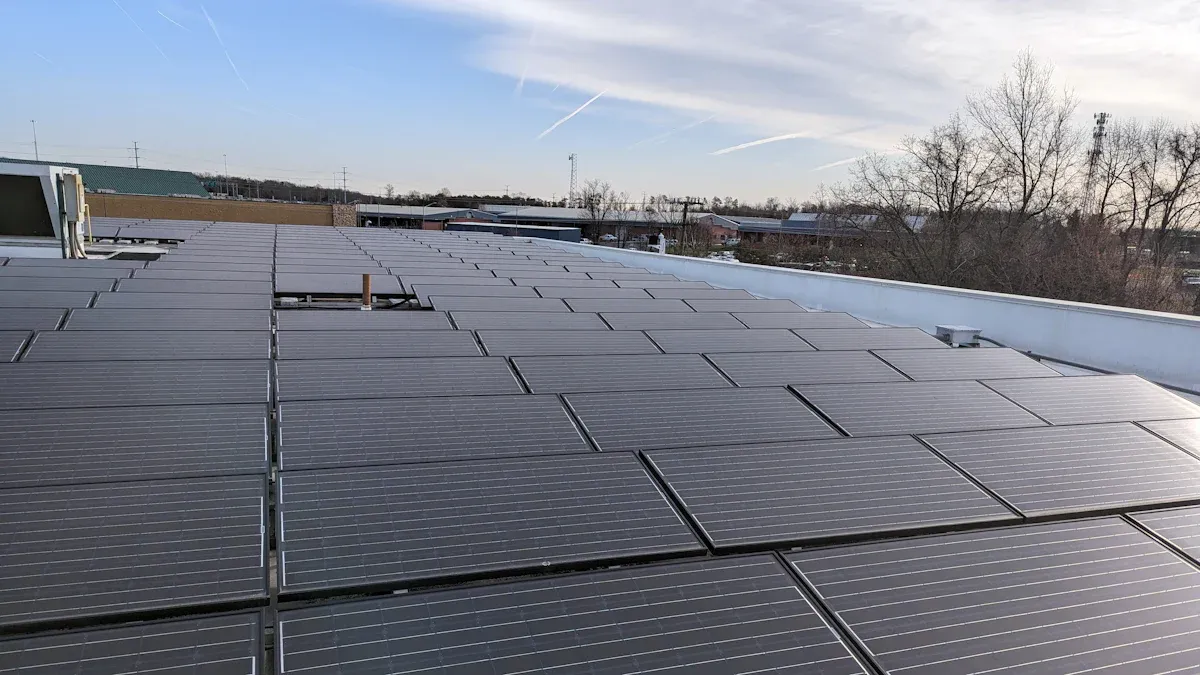
Ballasted mounting systems are a good way to put solar panels on flat roofs. You do not have to make holes in the roof. This helps keep the roof strong. The flat roof solar mounting system uses heavy things to hold the panels down. Many people use it for commercial buildings.
Weight-Based Design
Ballasted systems use heavy stuff to keep solar panels in place. The weight stops wind from lifting the panels. You can use concrete blocks, gravel, or steel weights. The system can move a little with the building. This helps stop cracks from forming. You can install it fast because you do not need glue or things that need to dry.
Cost-effectiveness: You can save 20–30% on setup costs compared to other systems.
Eco-friendliness: Many parts can be used again, and shiny ballast can help lower energy bills.
Durability: Ballasted roofs can last more than 40 years and can handle sun and heat changes.
Flexibility: The system can move with the building, so there is less damage.
Wind resistance: The heavy weight helps protect against strong wind.
Roof Integrity
Your roof stays safe with a ballasted flat roof solar mounting system. You do not need to drill or make holes, so the waterproof layer stays safe. This lowers the chance of leaks and damage over time. You also do not have to worry about fixing holes in the roof.
Pros and Cons
Advantages
Ballasted mounting systems have many good points for flat roof solar mounting system jobs.
Limitations
You need to think about how heavy the system is. Some roofs cannot hold a lot of weight. Wind can still be a problem if the system is not made right. It can be hard to fix or move things if you need to work on the roof.
Best Roof Types
Ballasted mounting systems are best for flat roofs that do not leak. You see these systems a lot on commercial buildings. The flat roof solar mounting system uses concrete blocks or steel weights to hold panels without making holes.
Flat roofs that do not leak
Commercial buildings with big, open roofs
Roofs that can hold more weight
Tip: Always check if your roof can hold the weight before picking a ballasted flat roof solar mounting system. Ask a pro to make sure it is safe and follows the rules.
Climate Impact
When you choose a flat roof solar mounting system, you must think about how climate affects your setup. Weather can change how well your system works and how long it lasts. Ballasted mounting systems face different challenges in different climates. Here are some key climate factors you need to consider:
High Winds
Strong winds can lift solar panels if you do not use enough ballast. In windy areas, you may need extra weight or windbreaks to keep your flat roof solar mounting system secure. Systems with low tilt angles can struggle more in high winds. You should ask your installer about local wind speeds and make sure your system meets safety standards.Heavy Snow
Snow adds extra weight to your roof and your mounting system. If you live in a snowy area, you must check if your roof can hold the extra load. Snow can also block sunlight and lower energy output. You may need to clear snow off your panels to keep your flat roof solar mounting system working well. Some systems use stronger frames to handle snow loads.Frequent Rainfall
Rain can cause erosion around the ballast materials. Over time, water can wash away gravel or shift concrete blocks. This can make your flat roof solar mounting system less stable. You should check your system after heavy rain and make sure the ballast stays in place. Waterproofing is important to protect your roof from leaks.Extreme Temperatures
Hot and cold weather can change how materials expand and contract. Ballasted systems can move a little with temperature changes, which helps prevent cracks. You should pick mounting hardware that can handle big temperature swings. This helps your flat roof solar mounting system last longer.
Tip: Always ask your installer about local climate risks before you pick a flat roof solar mounting system. A good installer will know how to adjust the design for your area.
You need to match your flat roof solar mounting system to your local climate. This helps you avoid problems and keeps your solar panels working for years. Regular checks and smart design choices make your system strong against weather. If you plan ahead, you will get the most out of your solar investment.
2. Mechanically Attached Mounting Systems
System Overview
Mechanically attached mounting systems keep solar panels safe on flat roofs. You use fasteners and plates to connect the system to the roof. This works well for buildings that cannot hold heavy ballasted systems. The installation is lighter. This helps protect your roof from damage and stress.
Fastening Methods
There are different ways to fasten mechanically attached systems:
Mechanical Fasteners
You use screws, bolts, or rivets to attach racks to the roof. These fasteners make strong connections. They are easy to put in and take out.Powder-Actuated Fasteners (PAFs)
You use a special tool to push fasteners into the roof deck. This method is quick and strong. It holds up well under pressure.Screw Fastening Systems
You use screws for thin roofs. New designs work for thick roofs too. These systems clamp tightly and hold strong.Induction-Welded Systems
You weld plates to the roof membrane. This spreads out the force. You need fewer fasteners with this method.
Tip: Pick the fastening method that fits your roof and local rules.
Waterproofing
Waterproofing is very important for mechanically attached mounting systems. You must seal every hole to stop leaks. Installers use special gaskets and sealants around fasteners. This keeps water out and protects your roof. If you install it right, your roof lasts longer and leaks are less likely.
Pros and Cons
Strengths
Mechanically attached mounting systems have many good points:
They cost less and work in many temperatures.
You can check and fix the area under the solar panels easily.
You do not add heavy weight to your roof. This is safer for weak roofs.
The system holds up well in strong winds because it is anchored.
Drawbacks
There are some things to think about before you choose this system:
You may see more seams and fastener spots. These can leak if not sealed well.
Wind can lift panels more than with fully glued systems. Pressure is strong at fastener spots.
The roof membrane may move in strong wind. This can make noise and look loose.
You may need to check for leaks and loose fasteners more often.
Roof Compatibility
Mechanically attached mounting systems fit many roof types. About 80% of flat roofs use them. They are quick to install and cost less than other systems. You can use them on roofs that cannot hold heavy weight. Manufacturers can check these roofs easily to make sure they are safe.
Note: Always check your roof before you pick a mechanically attached system. Make sure your roof can handle the stress at the attachment spots.
Flat Roof Mounting Systems give you choices for different buildings. Mechanically attached systems help you save money, work fast, and keep your roof safe.
Safety Tips
When you install a mechanically attached flat roof solar mounting system, you must follow strict safety steps. These steps protect you, your team, and your building. Use this checklist to keep your project safe and successful:
Wear Proper Safety Gear
Always wear a hard hat, gloves, and non-slip shoes.
Use a safety harness when you work on the roof.
Wear eye protection when you drill or fasten parts.
Check Roof Structure First
Inspect the roof before you start. Look for weak spots, water damage, or loose materials.
Make sure your roof can handle the weight and stress of a flat roof solar mounting system.
Ask a structural engineer for advice if you see any problems.
Follow Manufacturer Instructions
Read the manual for your flat roof solar mounting system.
Use only the parts and tools listed by the manufacturer.
Do not skip steps or use shortcuts.
Seal All Penetrations
Every time you make a hole, seal it right away.
Use high-quality sealants and gaskets to stop leaks.
Check each seal after you finish the job.
Secure All Fasteners
Tighten every bolt, screw, and plate to the correct torque.
Use a torque wrench for accuracy.
Loose fasteners can cause panels to shift or fall.
Keep Work Area Clean
Remove tools, debris, and packaging from the roof.
Clean up spills right away to prevent slips.
A tidy workspace helps you avoid accidents.
Watch the Weather
Do not install a flat roof solar mounting system in rain, snow, or strong wind.
Wet or icy roofs are slippery and dangerous.
Schedule work for dry, calm days.
Use Proper Lifting Techniques
Lift heavy parts with your legs, not your back.
Ask for help when you move large panels or frames.
Use ropes or pulleys for very heavy items.
Inspect After Installation
Walk the roof and check every part of the flat roof solar mounting system.
Look for loose fasteners, missing seals, or damaged panels.
Fix problems before you leave the site.
Plan for Regular Maintenance
Set a schedule to inspect your flat roof solar mounting system every year.
Clean panels and check for leaks or rust.
Early repairs prevent bigger problems.
Tip: Always work with a trained installer or professional. They know the best safety practices for flat roof solar mounting systems and can spot risks you might miss.
You protect your investment and your team when you follow these safety tips. A safe flat roof solar mounting system lasts longer and works better. Never skip safety steps, and always ask for help if you are unsure.
3. Hybrid Mounting Systems
System Overview
Hybrid mounting systems are a smart way to install a flat roof solar mounting system. They use both ballast and mechanical anchors. Ballast holds most solar panels down. Mechanical anchors go at the corners and edges. This setup lowers roof weight and makes panels stable in strong wind. Hybrid systems work for many buildings and climates. You get more choices for design and safety.
Combined Features
Hybrid mounting systems mix the good parts of ballasted and mechanically attached systems. Heavy things like concrete blocks hold most of the solar array. Mechanical fasteners go at important spots like corners and edges. This keeps your flat roof solar mounting system safe in strong wind. Your roof does not get too heavy. Hybrid systems fit many roof shapes and sizes.
Design Flexibility
You can change hybrid mounting systems to fit your building. You pick where to put ballast and anchors. You can change the tilt angle of solar panels. You can design your flat roof solar mounting system for local weather, rules, and roof strength. You get more freedom to make a system that works for your space.
Pros and Cons
Benefits
Hybrid mounting systems have many good points for your flat roof solar mounting system. They are reliable and save money. You use less ballast, so your roof has less stress. You get more choices for design and placement. You can follow strict rules and handle tough weather. Hybrid systems help with sustainability and energy independence.
Challenges
You need to think about some problems before you pick a hybrid system. You may pay more at first. The system can be hard to install and take care of. You need to plan for technical parts and rules. You may need special energy storage.
When to Choose Hybrid
Pick a hybrid flat roof solar mounting system in special cases. Hybrid systems work well in places with earthquakes or strong wind. You can use anchors instead of ballast when needed. You get better safety for tall buildings and places with hurricanes. Hybrid systems fit special places like islands or resorts with tough weather.
Tip: Always ask a solar expert to check your roof and weather before you pick a hybrid flat roof solar mounting system. You get the best results when your system matches your building and climate.
Budget & Performance
When you plan a flat roof solar mounting system, you need to think about both budget and performance. Hybrid mounting systems give you a middle ground. You do not pay the highest price, but you also do not get the lowest cost. You get a system that works well in many situations.
Budget Considerations
Hybrid mounting systems cost more than ballasted systems but less than mechanically attached ones. You pay a moderate price for installation. You save money because you use less ballast and fewer anchors. You do not need to reinforce your roof as much. You also spend less on repairs because the system protects your roof from leaks and stress.
You avoid the high cost of full mechanical attachment.
You do not need to buy as much ballast as with a ballasted system.
You save on labor because installation is faster.
You spend less on roof repairs over time.
Performance Characteristics
Hybrid mounting systems give you strong performance. You get the best parts of both ballasted and mechanically attached systems. Your flat roof solar mounting system stays stable in high winds. You do not worry about panels shifting or lifting. You also get good protection against leaks and roof damage.
You get strong anchoring at the edges and corners.
You use ballast to keep most panels in place.
You can adjust the design for your local weather.
You get a system that lasts longer and needs less maintenance.
Comparison Table
Here is a quick look at how hybrid mounting systems compare to other types for budget and performance:
Tip: If you want a flat roof solar mounting system that balances cost and strength, hybrid systems give you a smart choice. You do not need to sacrifice safety for savings.
Key Points to Remember
Hybrid systems help you control costs and boost performance.
You get a flat roof solar mounting system that fits many buildings and climates.
You spend less on repairs and get more years of use.
You can trust your panels to stay safe in tough weather.
When you choose a hybrid flat roof solar mounting system, you make a smart investment. You get good value for your money and strong protection for your roof and solar panels.
4. Choosing Flat Roof Mounting Systems
Picking the right Flat Roof Mounting Systems takes planning. You need to think about many things. This helps your solar panels work well. It also keeps your roof safe.
Key Factors
Roof Type
Find out what your roof is made of. Some systems fit concrete roofs better. Others work well on membrane roofs. Look for things like vents or skylights that might get in the way.
Load Capacity
Your roof must hold the system and panels. Think about wind and snow weight. Ask for reports from engineers. These show how each system handles stress.
Local Codes
Rules are different in each place. You must follow local building codes. These rules cover where you can install, fire safety, and electrical standards. They help keep your building safe and working for a long time.
Climate
Weather changes your choice. Strong winds, lots of snow, and rain can affect stability. Check if you need wind bracing or drainage for your area.
Budget
Make a budget before you start. Think about material quality, how fast you can install, and future costs. Strong materials like aluminum or stainless steel cost more. They last longer.
Selection Guide
Roof Assessment
Do these steps to check your roof for Flat Roof Mounting Systems:
Have a solar expert visit your site first.
Get your roof checked for damage and things in the way.
Ask for a report to see if your roof can hold the weight.
Figure out how much sun your roof gets using shade and roof info.
Look at a report with advice on system type and how to install.
System Comparison
Compare systems based on what your roof needs. Look for strong bracing made from tough materials. Check how well each system stands up to wind. See how fast you can install each one. Ask for reports from engineers to help you choose.
Professional Advice
Talk to certified installers. They know the local rules and weather problems. Experts help you avoid mistakes. They make sure your Flat Roof Mounting Systems are safe.
Mistakes to Avoid
Not thinking about weather can cause leaks and damage.
If you do not line up flashing or seal holes, water can get in.
Forgetting drainage can make water pool on your roof.
Skipping regular checks lets dirt and blockages build up.
Using the wrong glue or ways to install can make your system not last as long.
Tip: Make your roof a little sloped to help water drain and stop pooling.
Follow these steps and avoid mistakes to get the best Flat Roof Mounting Systems. Good planning and expert help protect your money and make your system last longer.
5. Installation, Maintenance & Cost
Installation Steps
Preparation
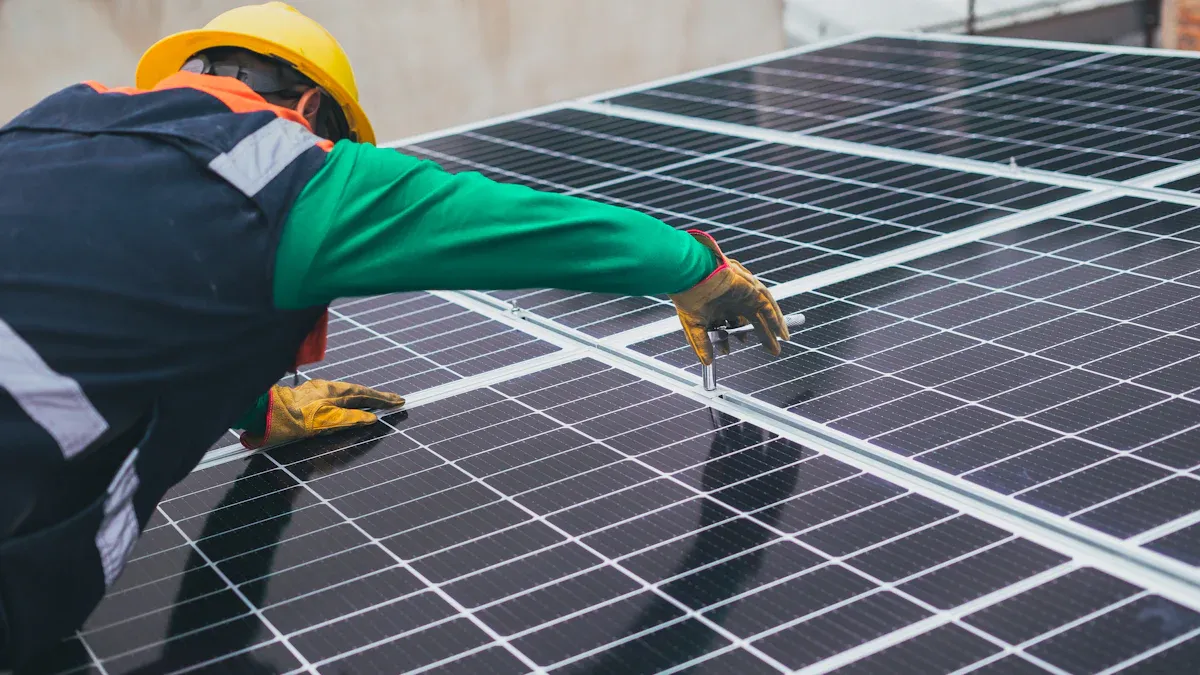
First, you get your roof ready for Flat Roof Mounting Systems. You check how much weight your roof can hold. You look for any roof damage. You also check the electrical system and plan upgrades. You find places with shade or things in the way. Next, you get permits and finish your design. You apply for building permits and utility agreements. You make sure your system design is done and plan when equipment will arrive.
Safety
Safety is important during every step. You wear safety gear like hard hats and gloves. You check the roof for weak spots before starting. You follow the instructions from the manufacturer. You seal every hole to stop leaks. You tighten fasteners and keep the area clean. You do not work in bad weather. You use safe ways to lift heavy things. You check the system after installing to find problems early.
Timeline
The installation process usually goes like this:
You check and fix the roof (1–2 days)
You get permits and finish the design (1–2 weeks)
You get equipment and prepare the site (1–3 days)
You install the mounting system and panels (2–5 days)
You connect wires and set up the inverter (1–2 days)
You do a final check and get utility approval (1–3 days)
Tip: Bad weather or slow permits can cause delays. Most flat roof solar mounting system installations take two to four weeks.
Maintenance Needs
Inspections
You keep Flat Roof Mounting Systems working by checking them twice a year. You look for damage and loose fasteners. You check for signs of wear. You clear leaves and trash so water does not build up. You check seals and flashings to stop leaks. You put on coatings to help waterproof the roof.
Common Issues
Some problems happen often. Water can pool and cause leaks if drainage is bad. Trash can block water and hurt panels. Flashings can wear out and need new sealant. Fix these problems fast so repairs do not get bigger.
Maintenance Checklist:
Check the system and roof two times a year
Remove leaves and trash
Look for water pooling after rain
Reseal flashings and holes
Put on roof coatings when needed
Note: Regular care helps your flat roof solar mounting system last longer and keeps energy strong.
Longevity
Lifespan
How long Flat Roof Mounting Systems last depends on roof type and how well they are installed. Most flat roofs last 15 to 30 years. EPDM and PVC can last 30 years or more. Metal roofs can last 40 to 70 years.
Durability Factors
You can make your system last longer by doing three things:
Get skilled workers and follow the manufacturer’s rules.
Protect your system from very hot, cold, wet, or windy weather.
Check your roof often, fix problems fast, and keep it clean.
If you use good materials and take care of your system, your flat roof solar mounting system will last longer and work better.
Cost Overview
Price Ranges
You should know the price before you pick a flat roof solar mounting system. The cost depends on what your roof is made of and how big your project is. Here is a table that shows the usual price per square foot for each material:
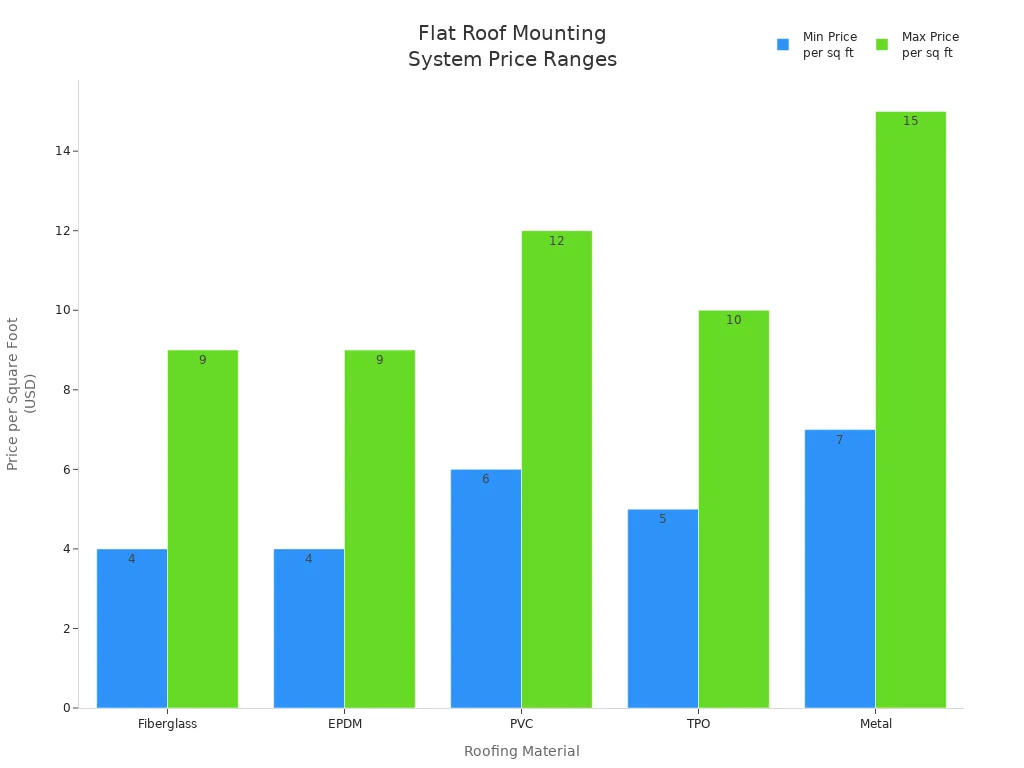
Metal and PVC roofs cost more money. EPDM and fiberglass are cheaper. The price for a flat roof solar mounting system also changes if labor costs go up or if local rules are strict.
Cost Factors
Many things change the total price of your flat roof solar mounting system. You should think about these before you start:
Type of roofing material: Some roofs cost more and need extra care.
Labor costs: Skilled workers charge more, and prices are different in each place.
Roof accessibility: Hard-to-reach roofs take more time and money.
Insulation needs: Extra repairs or upgrades make the price go up.
Geographic specifics: Local rules and weather change what you pay.
Timing: Busy times of year make labor cost more.
Existing condition of the roof: Damaged roofs need more work before you start.
Permitting requirements: Permits add to your total cost.
Tip: Always check your roof and local rules before you plan your flat roof solar mounting system. This helps you avoid surprise costs.
Budget Tips
You can save money and get the best deal on your flat roof solar mounting system if you follow these tips:
Compare materials: Pick a roof material that fits your budget and lasts a long time.
Get multiple quotes: Ask different installers for prices to find the best one.
Schedule off-season: Install when it is less busy to pay less for labor.
Plan for maintenance: Regular checks help you avoid big repair bills.
Check for incentives: Look for rebates or tax credits in your area.
Note: Good planning helps you keep costs low and get a flat roof solar mounting system that works for many years.
Future Trends
Material Advancements
New materials make flat roof solar mounting systems stronger and better. You see these new materials in today’s market:
Polymer-Based Systems: These last longer and stand up to bad weather.
Advanced Hybrid Solutions: Mix metal, rubber, and thermoplastic for strong systems.
Self-Healing Coatings: These fix small damage and help your roof last longer.
Reflective Surfaces: They help keep buildings cool and save energy.
Design Innovations
Designs for flat roof solar mounting systems keep getting better. Here are some new systems and what they do:
These new designs help you get a flat roof solar mounting system that installs faster, lasts longer, and saves energy.
Tip: Ask your installer about new materials and designs. These can help your flat roof solar mounting system work better and save you money over time.
If you learn about Flat Roof Mounting Systems, you can install solar panels better. You save space and can reach panels for repairs more easily. You also have more ways to place your panels. Before picking a system, check what your roof is made of. Make sure your roof is strong and follows local rules. Ask experts for help if you are not sure. When you plan, think about new changes coming soon:
Tip: Keep learning about new technology so your solar panels work their best.
FAQ
What is a flat roof solar mounting system?
A flat roof solar mounting system holds solar panels securely on flat roofs. You use it to keep panels stable and safe. This system helps you get the most sunlight and protects your roof from damage.
Can you install a flat roof solar mounting system on any flat roof?
You can install a flat roof solar mounting system on most flat roofs. You need to check the roof’s strength and condition first. Ask a professional to inspect your roof before starting installation.
How long does a flat roof solar mounting system last?
Most flat roof solar mounting systems last 20 to 30 years. You can extend the lifespan with regular inspections and maintenance. Good materials and proper installation help your system last longer.
Do you need to drill holes for a flat roof solar mounting system?
You do not always need to drill holes. Ballasted systems use weight instead of fasteners. Mechanically attached systems require drilling. Ask your installer which method fits your roof best.
How much does a flat roof solar mounting system cost?
Costs vary by roof type, size, and materials. You usually pay $4 to $15 per square foot. Get quotes from several installers to find the best price for your flat roof solar mounting system.
What maintenance does a flat roof solar mounting system need?
You should inspect your flat roof solar mounting system twice a year. Clean panels, check for loose fasteners, and reseal any holes. Regular care prevents leaks and keeps your system working well.
Will weather affect my flat roof solar mounting system?
Weather can impact your flat roof solar mounting system. Strong winds, heavy snow, and rain may cause problems. You can protect your system by choosing the right design and checking it after storms.
Can you upgrade an old flat roof solar mounting system?
You can upgrade an old flat roof solar mounting system. Replace old parts, improve waterproofing, or add new panels. Ask a solar expert to review your system and suggest upgrades.
